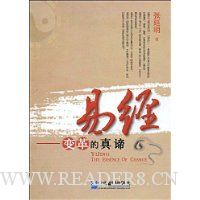
基本信息出版社:企业管理出版社
页码:430 页
出版日期:2009年04月
ISBN:7802551625/9787802551626
条形码:9787802551626
版本:第1版
装帧:平装
开本:16
正文语种:中文/英语
内容简介 《易经:变革的真谛》是首次以中文、英文及汉语拼音三种文体形式对照出版,满足于不同文化程度和专业领域学习易经的需求,尤其对外籍教员和汉文化推广者,是不可多得的研读材料。《易经:变革的真谛》并非简单地将《易经》思想加以阐释,而是解读其对变化真谛的认识,结合原著中情形特点分析的方法,以启发点和案例等道出易经哲理在现代的生命力和应用意义,是各级党政机关领导、军事指挥官及企事业单位决策层如何利用“万变”的外部环境而适时而行、因势而动,变不利为有利的思维工具。有影响力是领导力的体现。领导力强的人有个共同特点,就是管理有理念、讲话有哲理、做人做事有原则。理念是从一般人持有的观念中提炼提升出来的,高于观念。哲理是通过学习和继承,在领导实践中发挥出来的。在处理一个给出的情形,有原则可循,局面就不会失控。一个组织能够在变革中生存而不被淘汰、发展以至壮大,在于强势的领导和顺势的员工驾驭变化,“唯变所适”,这是变革的法则。变化即进退,这是变革的真谛。理念、哲理、原则、法则等,讲得深刻而且直到现在人们意中有言中亦有的,追根溯源,来自道家和儒家,而老子和孔子的哲学思想,发自同一根本,就是《周易》。
作者简介 张延明教授,哈佛大学教育学博士(高等教育领导与行政管理专业,1992),哈佛大学教育学硕士(管理与督导专业,1988)。美国康涅狄格大学理学硕士(心理学与督导学专业,1987)。哈佛大学商学院研究员,西点军校领导行为学研究员。新加坡南洋理工大学管理学终身教授,负责管理学部教学与行政领导工作,博士生导师。参与南洋大学商学院MBA、智慧型企业管理课程设计并主讲,南澳国立大学暨亚太商学院新加坡分院MBA核心课程设计并主讲。有丰富的领导学、管理学方面的研究、教学、企业领导咨询和培训经验,包括负责校长培训与督导、新加坡公务员管理学院管理咨询、高级公务员领导咨询与培训、摩托罗拉大学管理咨询与培训等。
编辑推荐 《易经》成书于西周,是我国古代著作中最具哲理的经典著作。儒家、道家、兵法家等的核心思想均源于《易经》。《易经》揭示了“易”即变的内涵,阐述了变化的原理,且指出了驾驭变化的原则。《易经》是全世界公认的发行量仅次于《圣经》的经典著作。《易经》的影响是历久而且空前的,全世界有100多所学院、研究机构在致力于对这一著作的研究和应用。《易经》是中华文明瑰宝,是人类的伟大杰作。《易经》的文化精髓至今熠熠生辉,其内容包括天道、地道、人道,探讨人类的思想体系、宇宙观及其方法论,研究和阐释了世界、社会、人生运动变化的规律。
目录
Preface 前言
About the Author 作者
Introduction: About The Book of Changes 关于易经
Part Ⅰ
Scenario 1 乾(Qian) The Generative
Scenario 2 坤(Kun) The Nurturer
Scenario 3 屯(Zhun) The Gathering Clouds
Scenario 4 蒙(Meng) The Fountains in the Mountains
Scenario 5 需(Xu) The Clouds in the Sky
Scenario 6 讼(Song) The Disoriented Sky and Water
Scenario 7 师(Shi) The Earth Embracing the Water
Scenario 8 比(Bi) The Water-Earth Relationship
Scenario 9 小畜(Xiao Xu) The Wind across the Sky
Scenario 10 履(Lu) Treading behind a Tiger
Scenario 11 泰(Tai) Engagement and Alignment
Scenario 12 否(Pi) Divergence and Disorder
Scenario 13 同人(Tong Ren) Harmony with Nature
Scenario 14 大有—a You) The Vigor for Harvests
Scenario 15 谦(Qian) The Mountain of Low Profile
Scenario 16 豫(Yu) Spring Coming in High Spirits
Scenario 17 随(Sui) The Fundamentals of Followership
Scenario 18 蛊(Gu)The Constructive against the Obstructive
Scenario 19 临(Lin)Interdependence and Intimacy
Scenario 20 观(Guan)Non-interference in Cultivation
Scenario 21 噬嗑(Shi He)Differentiated Discipline
Scenario 22 贲(Bi)Face Values VS.Intrinsic Values
Scenario 23 剥(Bo)The Weathering Mountain
Scenario 24 复(Fu)The Sun Is Rising
Scenario 25 无妄(Wu wang)The Thunder under the Sky
Scenario 26 大畜—a Xu)The sky in the Mountain
Scenario 27 颐(Yi)Nourishing and Nurturing
Scenario 28 大过—a Guo)The Overwhelming Is Overwhelmed
Scenario 29 坎(Kan)Hanging In in High Water
Scenario 30 离(Li)Bright,Bright Sunlight
Part Ⅱ
Scenario 31 咸(Xian)The Touch of Tolerance
Scenario 32 恒(Heng)The Unchanging in Changes
Scenario 33 逐—un)Descending VS.Ascending
Scenario 34 大壮—a Zhuang)The Infinite Might and Influence
Scenario 35 晋(Jin)The Illuminating Sun
Scenario 36 明夷(Ming Yi)The Shadowed Sunshine
Scenario 37 家人(Jia Ren)All from and for the Family
Scenario 38 睽(Kui)The Divergent Destinations
Scenario 39 蹇(Jian)The Trials of a Long Journey
Scenario 40 解(Jie)The Thunder Hying out of the Water
Scenario 41 损(Sun)The Ways of Losing and Gaining
Scenario 42 益(yi)The Inter-winding Interactions
Scenario 43 (Guai)The Spirited Swamp
Scenario 44 (Gou)The Sweeping Wind
Scenario 45 萃(Cui)The Gathering Water
Scenario 46 升(Sheng)The Growing Tree
Scenario 47 困(Kun)The Seeping Swamp
Scenario 48 井(Jing)The well and Its Waters
Scenario 49 革(Ge)The Call for a Change
Scenario 50 鼎—ing)The Trig}od of Tripartite Balance
Scenario 51 震(Zhen)The Pounding Thunders
Scenario 52 艮(Gen)The Igniter and the Brake
Scenario 53 渐(Jian)The Hovering Swan Geese
Scenario 54 归妹(Gui Mei)The Merry Marriage
Scenario 55 丰(Feng)The Fire and the Thunder in Accord
Scenario 56 旅(Lu)The Challenge of Traveling
Scenario 57 巽(Xun)The Whistling Wind
Scenario 58 兑—ui)The Swamp of Serenity
Scenario 59 涣(Huan)The Wind Stroking the Water
Scenario 60 节(Jie)The Overflowing Water
Scenario 61 中孚(Zhong Fu)The Wind Touching the Swamp
Scenario 62 小过(Xiao Guo)The Thunder Is a Little Louder
Scenario 63 既济(ji ji)The Ripping River
Scenario 64 未济(Wei Ji)The Rippling River
Part Ⅲ
About the Ten Wings
The Thematic Analyses(《系辞上传》Xici ShAng ZhuAn Part 1)
The Essence of Change
The Qualified Leader
The Thematic Analyses(《系辞下传》)Xici Xia Zhuan Part 2)
A Breakhead for a Breakthrough
Who Are on Board With You?
The Structural Analyses (《说卦传》 Shuogua Zhuan)
The Law of Nature, and the Nature of Man
The Sequential Descriptions (《序卦传》Xugua Zhuan)
The Principles Guiding Developmental Stages
The Supplementary Comments (《序卦传》Xugua Zhuan)
Invention and Innovation
Glossary
Appendix 1.The Five Classics, Four Books, and the Thirteen Confucian Classics (四书五经,十三经)
Appendix 2.The Formation of the Book of Changes (《周易》形成的年代)
Appendix 3.Contributions of the Chinese classics to Leadership
Bibliography
……
序言 Yi Jing(,Ching《易经》),the Book of Changes came into being in thetimes of the Western Zhou Dynasty(西周1046~771 B.C.).It has been the most archaic works among the Chinese classics ever since.Various schools ofthinkers developed their philosophies from the primitive philosophical perspee-tives expressed in Y/.Jing(群经之首,百家之根),like Taoism(Lao Zi老子),Confucianism(Confucius孔子),Mohism(Mozi墨子),military strat-egists(Sun Zi孙子),and alike.
文摘 插图:

后记 读者看到,每一卦的卦象或抽象、或形象地勾勒出该卦所要描绘的情形,十翼的“象传”给以文字描述;每一卦的主题(卦辞)点出该卦的要义,十翼的“彖传”纲领式地诠释其内含的哲理,并告诉应对这种情形的人所要具备的特质及需要采取的适当行为。读了八八六十四种情形,相信读者定能够获得灵感(Inspimtion),不仅想到如何应用(Application),更要捕捉灵感中应对现实情形的新的原则和方法。《易经系辞上传》第十二章里讲到,“圣人有以见天下之动,而观其会通”,“会通”是由分析动因、动机、动力和动态而来。《易经》提供的法宝之一,就是当面对一种情形时,分析情形特点,发展地、开放式地考虑应变之策,阶段性地回顾走过的路程。
《易经系辞上传》第十章里“以言者尚其辞,以动者尚其变,以制器者尚其象”,是在告诉人们,讲话者要有影响力,在于其言辞;推展正在做的事,要讲究适时调整;设计自己的工作或产品,重要的是其形象、象征意义和内涵。这对每个人尤其是领导者都不无启迪。
《易经》第六十三卦“既济”(已过河),指事物已发展到理想状态,而设最后一卦第六十四卦为“未济”,即新的矛盾又出现,还未过河,并以“小狐过河”的寓言形式告诫人们,湿其尾将影响速度,浸了头就更难以渡过难关。这使人们认识到,“打江山易,守江山难”,要有忧患意识;这更是在说,到了第六十三卦,要讲的都讲了;从第六十四卦,不是完结而是开始,由读者去继续前瞻新的可能出现的情形,设计自己的路线。