基本信息出版社:Longman
页码:400 页
出版日期:2008年11月
ISBN:1405899875
International Standard Book Number:1405899875
条形码:9781405899871
EAN:9781405899871
版本:1
装帧:平装
正文语种:英语
内容简介 在线阅读本书
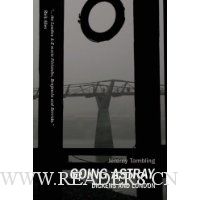
Among the numerous books on Dickens's London, Going Astray is unique in combining detailed topography and biography with close textual analysis and theoretically informed critiques of most of the novelist's major works. In Jeremy Tambling's intriguing and illuminating synthesis, the London A-Z meets Nietzsche, Benjamin and Derrida.' Rick Allen, author of The Moving Pageant: A Literary Sourcebook on London Street-Life, 1700-1914 Dickens wrote so insistently about London its streets, its people, its unknown areas that certain parts of the city are forever haunted by him. Going Astray: Dickens and London looks at the novelist's delight in losing the self in the labyrinthine city and maps that interest, onto the compulsion to go astray' in writing. Drawing on all Dickens' published writings (including the journalism but concentrating on the novels), Jeremy Tambling considers the author's kaleidoscopic characterisations of London: as prison and as legal centre; as the heart of empire and of traumatic memory; as the place of the uncanny; as an old curiosity shop. His study examines the relations between narrative and the city, and explores how the metropolis encapsulates the problems of modernity for Dickens as well as suggesting the limits of representation. Combining contemporary literary and cultural theory with historical maps, photographs and contextual detail, Jeremy Tambling's book is an indispensable guide to Dickens, nineteenth- century literature, and the city itself.
作者简介
Jeremy Tambling is Professor of Literature at the University of Manchester. An acknowledged expert on Dickens and on cities, he is the author of, among others, Re:Verse (Longman, 2007), Blake’s Night Thoughts (Palgrave, 2004), and Becoming Posthumous (Edinburgh University Press, 2001).
媒体推荐 "Jeremy Tambling's richly rewarding book about the most haunted metropolis in fiction." - The Independent, 15 December 2008 (readership 714,000)
"Tambling delivers subtle and sinuous reading[s] of individual works. He shows how deeply Dickens' fiction inhabits London places."- Times Higher Education, December 2008 (readership 88,000)
专业书评 From the Back Cover
'Going astray, as this intelligent and provocative study proves, is the most rewarding technique for not-arriving, for detouring with purpose, recovering the dark soul of London, and the fictive ghosts who lead us by the elbow. Everything is lost but nothing vanishes. Charles Dickens, triumphantly rescued from the febrile embrace of heritage, the cold kiss of academia, sets out at twilight to tramp those unforgiving miles, the fathomless labyrinth of his imagination…’
Iain Sinclair, author of Lights Out for the Territory andLondon Orbital
‘Among the numerous books on Dickens’ London, Going Astrayis unique in combining detailed topography and biography with close textual analysis and theoretically informed critiques of most of the novelist’s major works. In Jeremy Tambling’s intriguing and illuminating synthesis, the London A-Z meets Nietzsche, Benjamin and Derrida.’
Rick Allen, author of The Moving Pageant: A Literary Sourcebook on London Street-Life, 1700-1914
.
目录
Going Astray: Dickens and London
By Jeremy Tambling
TABLE OF CONTENTS
Chapter One: Introduction: Dickens and London
I – Writing London
II – Dickens in London
III – Eighteenth Century London
IV – Wordsworth’s London
Chapter Two: Dickens London, Allegory
I – Street-life: Sketches by Boz
II – London as Ruin
III – Holborn / Holbein
Chapter Three: Mapping the City: Oliver Twist
I – Hanging Clothes
II – Islington to Field Lane
III – Bethnal Green to Chertsey
IV – North London
V – Jacob’s Island
Chapter Four: Tales from Master Humphrey’s Clock
I – Antiquarian History
II – Master Humphrey’s Clock
III – The Old Curiosity Shop
IV – The Old Curiosity Shop and Allegory
V – Towards Barnaby Rudge
VI – Barnaby Rudge and London
Chapter Five: Camden Town: The Railway in Dombey and Son
I – The Railway World
II – London in Dombey and Son
III – Dickens and Ruskin
IV – Trains and Trauma
Chapter Six: David Copperfield
II – The Strand
III – The Borough
IV – The Modern Babylon
Chapter Seven: Bleak House: London Before the Law
II – Legal London
III – Consecrated Ground
IV – ‘Mudfog’
Chapter Eight: London and Taboo: Little Dorrit
I – The City
II – Marseilles/ Marshalsea
III – Mrs Clennam’s Secret
IV – Bleeding Heart Yard
V – Mrs Merdle’s Parrot
VI – The Warm Baths
Chapter Nine: Traumatic London: Great Expectations
I – Smithfield
II – St Paul’s and Newgate
III – Newgate and Walworth
IV – Hanging Fantasies
V – Newgate and Estella
VI – The River
VII – Estella and the City
Chapter Ten: ‘The Scene of My Death’: The River in Our Mutual Friend &nbssp;
III – The River: Bermondsey and Millbank
IV – The River
V – Waste
VI – Headstone and Heterogeneity
Chapter Eleven: ‘City Full of Dreams’: The Uncommercial Traveller
I – Journalism
II – ‘Recollections of Mortality’
III – London and Melancholy
IV – Fashionable London
V – London Institutions
VI – Dickens’s Night Thoughts
Chapter Twelve: Dickens’s London: Dickens and Gissing
I – London after Dickens
II – Gissing in London
III – Realism and Idealism
IV – Suburban London
Notes
Dickens’s London: A Gazetteer
……